Overview
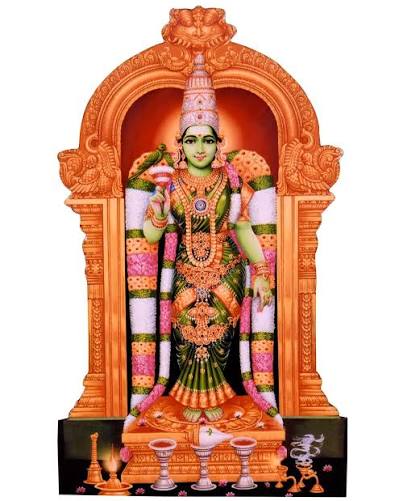
The Arulmigu Meenakshi Sundareshwarar Temple in Madurai is one of India's most celebrated Shakti and Shaiva temples. Dedicated to Goddess Meenakshi and Lord Sundareshwarar, the temple is renowned for its towering gopurams, exquisite Dravidian architecture, ancient history, and grand Chithirai Festival.
History & Mythology
Historical Timeline
The Meenakshi Temple traces its origins to ancient Madurai, one of the oldest continuously inhabited cities in India. References to the temple appear in Sangam literature dating back over 2,000 years. The original shrine is believed to have existed before the Common Era.
The temple suffered destruction during the invasion of Malik Kafur in 1310 CE. It was subsequently restored and expanded under the Vijayanagara rulers and later by the Nayak kings, especially King Tirumala Nayak and Ariyanatha Mudaliar during the 16th and 17th centuries. The present magnificent structure largely belongs to the Nayak period.
Today, the temple remains a major spiritual, cultural, and architectural center of South India.
Mythology (Puranic Significance)
According to legend, King Malayadhwaja Pandya and Queen Kanchanamalai performed a yajna seeking a child. Goddess Parvati emerged from the sacred fire as a three-year-old girl with three breasts.
A divine prophecy declared that the third breast would disappear upon meeting her destined husband. The princess, named Meenakshi, grew into a powerful warrior queen and conquered many lands. When she encountered Lord Shiva in Kailasa, the third breast vanished, fulfilling the prophecy.
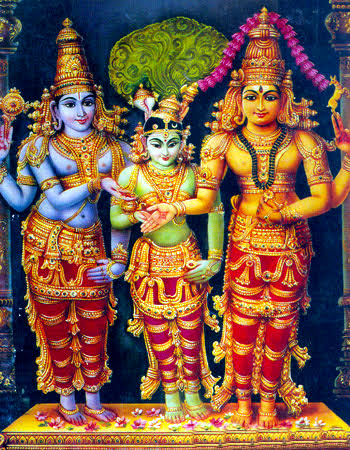
Shiva descended to Madurai as Sundareshwarar and married Meenakshi in a celestial wedding attended by all gods and sages. Their divine marriage is commemorated annually during the Chithirai Festival
Kings & Dynasties
The history of the Arulmigu Meenakshi Sundareshwarar Temple is closely intertwined with the rise and development of the Pandya Kingdom, whose capital city was Madurai. According to temple mythology, King Malayadhwaja Pandya and Queen Kanchanamalai performed a sacred yajna seeking an heir, from which Goddess Meenakshi emerged as a divine child destined to rule Madurai. This legend established the temple as the spiritual heart of the Pandya realm and connected the royal family directly to divine authority. Historically, the early Pandya rulers were the original patrons of the temple and played a crucial role in developing the first sanctums, shrines, and temple-centered urban layout of ancient Madurai. Sangam literature praises Madurai as a prosperous cultural and religious center where the worship of Shiva and Meenakshi flourished under Pandya patronage. The Pandyas endowed the temple with land grants, agricultural revenues, gold, livestock, and resources necessary for daily worship and religious festivals. Among the notable rulers, Maravarman Sundara Pandya I significantly expanded temple wealth and strengthened ritual practices through generous donations and administrative reforms. His successor, Jatavarman Sundara Pandya I, one of the greatest Pandya emperors, further enhanced the temple’s prosperity by granting villages, funding festivals, and supporting large-scale religious activities. The temple suffered severe damage in 1310 CE when Malik Kafur, the general of Alauddin Khalji, invaded Madurai and plundered many sacred structures and treasures. The subsequent period of political instability under the Madurai Sultanate led to the decline of temple activities for several decades. The revival of the temple began when Kumara Kampana, the Vijayanagara prince and son of Bukka Raya I, defeated the Madurai Sultanate and restored Hindu rule in the region. Under Vijayanagara administration, damaged shrines were repaired, priestly traditions were revived, and temple worship was re-established. The Vijayanagara rulers also reinstated temple land grants and laid the foundation for future architectural expansion. The most transformative phase in the temple’s history began with the establishment of the Madurai Nayak Kingdom under King Viswanatha Nayak, who reorganized temple administration and initiated extensive renovation projects. His trusted minister and military commander, Ariyanatha Mudaliar, played a monumental role in temple development and is traditionally credited with the construction of the famous Thousand Pillar Hall and several mandapas. Successive Nayak rulers, including Krishnappa Nayak, Veerappa Nayak, and Muthu Krishnappa Nayak, continued to support temple expansion, festivals, and public infrastructure for pilgrims. The temple reached its architectural and cultural zenith during the reign of King Tirumala Nayak, who greatly enlarged the complex, enhanced its gopurams, expanded ceremonial spaces, and institutionalized many of the grand festivals celebrated today. Tirumala Nayak is particularly remembered for popularizing the Chithirai Festival, which commemorates the divine marriage of Meenakshi and Sundareshwarar and remains one of the largest religious festivals in India. Later rulers such as Chokkanatha Nayak, Queen Mangammal, and Vijayaranga Chokkanatha Nayak continued to patronize the temple, protect its revenues, improve pilgrim facilities, and maintain its religious traditions. Through the combined efforts of the Pandya kings, Vijayanagara rulers, Nayak monarchs, devoted administrators, and later community patrons, the Meenakshi Temple evolved into one of the greatest masterpieces of Dravidian architecture and remains a living symbol of Tamil civilization, royal devotion, and sacred heritage.
Associated Saints
Adi Shankaracharya is traditionally associated with the Meenakshi Temple through a unique local legend. According to temple lore, during a period when Goddess Meenakshi manifested in a fierce (Ugra) form, causing fear among the people of Madurai after sunset, Adi Shankaracharya visited the temple to restore balance. The Goddess challenged him to a game of dice (Pachisi or Pachikalu), and through divine wisdom he emerged victorious. As part of the spiritual contest, Adi Shankaracharya is believed to have altered the placement of sacred Beejaksharas and installed the Sri Chakra before the Goddess, transforming her energy from a fierce (Tamasic/Ugra) aspect into a benevolent (Sattvic/Shanta) form. Since then, Meenakshi has been worshipped as the compassionate Mother Goddess of Madurai. Temple traditions regard this episode as a symbol of the harmonization of Shakti through Advaitic wisdom and devotion. Adi Shankaracharya is also traditionally credited with composing the Meenakshi Pancharatnam, a celebrated hymn praising the Goddess's beauty, grace, and supreme divinity.
The Arulmigu Meenakshi Sundareshwarar Temple has been sanctified by the devotion and literary contributions of numerous saints, poets, and spiritual luminaries of the Tamil Bhakti tradition. Among the foremost are the three principal Nayanmars—Tirugnanasambandar, Appar, and Sundarar—whose hymns in the Tevaram glorified Lord Sundareshwarar and established Madurai as one of the most sacred Shaiva centers in South India. The temple is also closely associated with Manikkavachakar, whose devotional masterpiece Tiruvachakam celebrates the grace and divine acts of Lord Shiva in Madurai. Another revered saint connected with the temple is Kumaraguruparar, who composed the famous Meenakshi Ammai Pillaitamil in praise of Goddess Meenakshi and is believed to have received the Goddess's blessings directly. The temple traditions also revere Nakkirar, who is associated with the legendary episode of Lord Shiva's poetic contest in Madurai. The lives of the 63 Nayanmars, the great Shaiva saints of Tamil Nadu, are celebrated within the temple through sculptures, festivals, and ritual observances. The temple has long served as a center for the propagation of Shaiva Siddhanta, attracting scholars, ascetics, and spiritual teachers who enriched Tamil devotional literature and philosophy. Through their hymns, teachings, and acts of devotion, these saints transformed Madurai into one of the foremost spiritual capitals of India, and their legacy continues to inspire millions of devotees who visit the temple each year.
Architectural Marvels
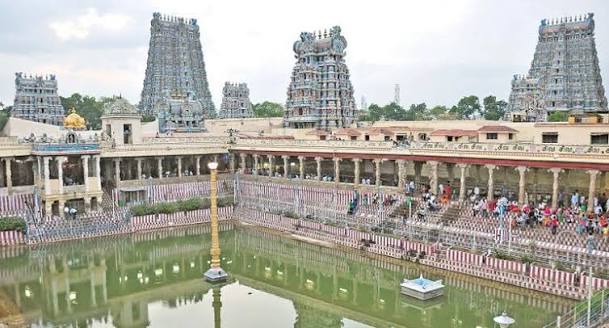
The main sanctums of Goddess Meenakshi and Lord Sundareshwarar are situated at the heart of the temple complex and are surrounded by a series of concentric prakarams (enclosures) that symbolize the sacred layers of the cosmos. These enclosures are protected by massive fortified walls, while the outermost boundary is marked by majestic gopurams facing the four cardinal directions, providing access to devotees from every side. The temple's broad corridors, streets, and open spaces are designed to accommodate grand religious processions during festivals, with ceremonial temple chariots moving through the surrounding streets as part of traditional celebrations. Encircling the temple are bustling markets and shops that have historically served pilgrims and visitors.
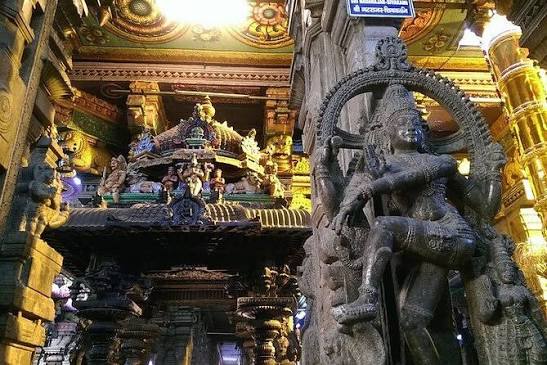
The vast temple complex encompasses numerous shrines, halls, sacred tanks, and administrative structures. The principal shrines dedicated to Goddess Meenakshi and Lord Sundareshwarar stand prominently within the innermost precincts, reflecting the central importance of the divine couple in the temple's worship traditions. In front of the Meenakshi shrine lies the sacred Potramarai Kulam, or Golden Lotus Tank, an important ritual and cultural landmark within the complex. The celebrated Ayiram Kaal Mandapam, known as the Thousand Pillar Hall, occupies a prominent section of the temple and is renowned for its intricate sculptures and artistic excellence. The complex further includes numerous mandapas, subsidiary shrines dedicated to various Hindu deities, sculptures commemorating scholars and poets of the Sangam era, religious learning centers, administrative buildings, gardens, and facilities traditionally used for temple activities.
Scholars have observed that the architectural layout of the temple reflects the principles of a sacred mandala, a symbolic cosmic diagram designed according to concepts of symmetry, spiritual order, and divine geometry. The temple has remained an active center of worship and pilgrimage through most of its history, with only a brief interruption following its destruction during medieval invasions before being restored and revitalized. In earlier centuries, the temple was enclosed within the fortified walls of the ancient city of Madurai, which were later removed during the colonial period. The temple also preserves the celebrated tradition of the Thiruvilayadal, the Sacred Divine Plays of Lord Shiva, which recount the miraculous events associated with Madurai and its spiritual heritage. These legendary episodes are depicted through murals and artistic representations throughout the temple, illustrating the divine acts of Lord Sundareshwarar, the trials faced by the city and temple, and their eventual restoration and glory.
The sacred Vaigai River flows along the northern side of Madurai and has played a vital role in the city's religious, cultural, and economic development since ancient times. Revered in temple traditions and Tamil literature, the river is closely associated with several episodes of the Thiruvilayadal Puranam, the divine acts of Lord Sundareshwarar. The city of Madurai was historically planned around the Meenakshi Temple and the Vaigai River, creating a harmonious relationship between sacred geography and urban life. During major festivals, particularly the Chithirai Festival, the Vaigai becomes the focal point of religious celebrations as Lord Kallazhagar from Alagar Kovil ceremonially enters the river before proceeding toward Madurai. The river has nourished the fertile plains surrounding the city for centuries, supporting agriculture, trade, and pilgrimage. In the spiritual symbolism of Madurai, the Meenakshi Temple represents the divine heart of the city, while the Vaigai River serves as its sacred lifeline, connecting the temple's mythology, rituals, and cultural traditions with the daily lives of its people.
Cultural Tapestry
Festivals
1)Chithirai Festival (April–May)
Most important festival.
Celebrates the celestial wedding of Meenakshi and Sundareshwarar.Attracts millions of devotees.
2)Navaratri
Nine nights dedicated to Goddess Meenakshi.
Cultural performances and special decorations.
3)Theppotsavam (Float Festival)
Celebrated at Mariamman Teppakulam.
Deities taken on a decorated float.
4)Shivaratri
Night-long worship of Lord Shiva.
5)Avani Moolam Festival
Re-enactment of divine acts of Lord Sundareshwarar.
Aadi and Thai Fridays
Special celebrations for the Goddess.
Culture & Traditions
1)Daily Vedic rituals and Agamic worship with traditional temple music using Nadaswaram and Thavil.
2)Processions of deities through temple streets.
3)Sacred marriage rituals symbolic of divine union.
5)Strong association with Tamil literature, dance, and music traditions.
Handlooms & Textiles
Traditional Sarees
1)Sungudi Sarees
2)Madurai Cotton Sarees
3)Temple Border Sarees
Hand Block Printed Sarees
Sungudi sarees are particularly associated with Madurai's cultural identity.
Local Textiles
1)Madurai Sungudi Handloom
2)Madurai Cotton Weaving
3)Hand Block Printing
4)Traditional Temple Textiles
5)Silk-Cotton Blended Fabrics
Madurai Sungudi has received Geographical Indication (GI) recognition.
Photo Gallery
Visitor Information
-
Best Time to Visit
October to March and Chithirai Festival season (April–May) for cultural grandeur
-
Temple Timings
Morning: 5:00 AM – 12:30 PM
Evening: 4:00 PM – 10:00 PM
(Timings may vary on festival days.)
How to Reach
Land Commute
1)Chennai
460 km
8–9 hours
2)Coimbatore
215 km
4–5 hours
3)Tiruchirappalli (Trichy)
135 km
2.5–3 hours
4)Salem
235 km
4–5 hours
5)Tirunelveli
160 km
460 km
8–9 hours
2)Coimbatore
215 km
4–5 hours
3)Tiruchirappalli (Trichy)
135 km
2.5–3 hours
4)Salem
235 km
4–5 hours
5)Tirunelveli
160 km
Explore Nearby
Food Exploration
1)Jigarthanda
2)Kari Dosa
3)Bun Parotta
4)Kothu Parotta
5)Idiyappam
6)Murungakkai Sambar
7)Madurai Mutton Chukka
8)Elaneer Payasam
9)Kuzhi Paniyaram
Popular Food Areas:
1)East Masi Street
2)West Masi Street
3)Town Hall Road
4)Vilakkuthoon Area
Public Choultries and Bhijanshala (5km radius)
1)Madurai Meenakshi TempleDevasthanam Guest Houses.
2)AryaVyshya Temple and Choultry
Various community dharmashalas around Masi Streets
Other Temples (100km radius)
1)Alagar Kovil (21 km)
2)Pazhamudircholai Murugan Temple (25 km)
3)Tirupparankundram Murugan Temple (10 km)
4)Koodal Azhagar Temple (1 km)
5)Narasingam Yoga Narasimha Temple (10 km)
6)Thiruvedagam Shiva Temple (20 km)
7)Vandiyur Mariamman Temple (5 km)
8)Srivilliputhur Andal Temple (75 km)
9)Dindigul Abirami Amman Temple (65 km)
10)Rameswaram Ramanathaswamy Temple (Approx. 100 km+)