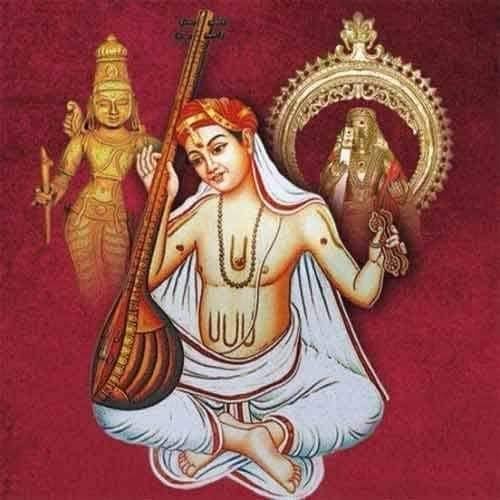
Sri Raghavendra Swamy (1595–1671) was a revered Madhva saint, scholar and philosopher whose Brindavana at Mantralayam draws millions of devotees every year. Discover his life, works and enduring legacy.
Who Was Sri Raghavendra Swamy?
Sri Raghavendra Swamy, also known as Guru Raghavendra, Raghavendra Tirtha or lovingly “Rayaru”, was a 17th-century saint, scholar and philosopher of the Dvaita (Madhva) tradition founded by Sri Madhvacharya. He is revered by millions of devotees, especially in Karnataka, Andhra Pradesh, Telangana and Tamil Nadu.
Early Life
He was born as Venkatanatha around 1595 at Bhuvanagiri in present-day Tamil Nadu, to Thimmanna Bhatta and Gopikamba. His family had a strong tradition of scholarship and music. After his father’s early death, he was raised by his elder brother, Gururaja Bhatta, and studied at Madurai under his brother-in-law, Lakshminarasimhacharya. He then studied at Kumbakonam under Sri Sudheendra Tirtha, the head of the Madhva mutt, and mastered grammar, logic, Mimamsa, Vedanta and music. He married Saraswati Bai and had a son, Lakshminarayana.
Sannyasa
Around 1621, Venkatanatha took sannyasa at the wish of Sri Sudheendra Tirtha and became Raghavendra Tirtha. He headed the mutt now known as the Sri Raghavendra Swamy Mutt. He travelled widely, debated with scholars, and spread the teachings of Dvaita Vedanta.
Literary Contributions
He was a prolific Sanskrit author. His best-known work is Parimala, a commentary on Sri Jayatirtha’s Nyayasudha. He also wrote commentaries on the works of Sri Jayatirtha and Sri Vyasaraja, on the Upanishads, the Bhagavad Gita and the Brahma Sutras, as well as works on Mimamsa and devotional hymns.
Mantralayam and the Brindavana
In his final years he settled at Mantralayam, a village on the banks of the Tungabhadra in Kurnool district, Andhra Pradesh. In 1671 (Shravana Bahula Dwitiya), he entered the Brindavana, a living samadhi, in the presence of his disciples. Devotees believe he remains present there, blessing all who come with faith.
The Sir Thomas Munro Account
A well-known account concerns Sir Thomas Munro, the British Collector of the Ceded Districts (Bellary). Around 1800, while examining the mutt’s land matters,Thomas Munro himself had stated to have experienced the Swamy’s presence(where Rayaru had explained him the matters of the land) at the Brindavana. The episode is mentioned in colonial-era district records and is often retold by devotees.
Devotional Beliefs
Devotees regard Sri Raghavendra Swamy as an incarnation of Prahlada, the great devotee of Lord Vishnu. He is called Kalpavriksha (the wish-fulfilling tree) and Kamadhenu for those who seek his blessings, and many devotees share personal experiences of comfort and answered prayers.
The Raghavendra Mantra
Shloka: Pujyaya Raghavendraya Satyadharma Rathaya Cha, Bhajatam Kalpavrikshaya Namatam Kamadhenave.
Meaning:Pujyaya Raghavendraya: Salutations to the venerable Sri Raghavendra, who is worthy of worship.
Satyadharma Rathaya Cha: He is ever devoted to truth (Satya) and righteousness (Dharma).
Bhajatam Kalpavrikshaya: To those who worship him with devotion, he is like the Kalpavriksha, the wish-fulfilling divine tree.
Namatam Kamadhenave: To those who bow before him in surrender, he is like the Kamadhenu, the divine cow that grants all desires.
In simple words: “I bow to Sri Raghavendra, who is worthy of worship, who is devoted to truth and dharma, and who, like the wish-fulfilling tree and the divine cow, grants the wishes of his devotees who worship him and bow to him with faith.”
This is the most popular verse (shloka) chanted in praise of Raghavendra Swamy, and it is attributed to Sri Appanacharya, one of his disciples. Devotees commonly recite it on Thursdays and at Raghavendra Mutt temples.
Sri Raghavendra Swamy was a devoted worshipper of Lord Vishnu in his various forms, and he especially revered Sri Rama and Sri Krishna through daily worship of the family deities, the Moola Rama, Digvijaya Rama, Jaya Rama and Vittala (Krishna) idols handed down in the lineage of the mutt. He performed elaborate daily pujas to Moola Rama, an idol traditionally believed to have been worshipped by Sri Madhvacharya’s lineage and passed down through the line of pontiffs to the mutt. His works and devotional compositions praise Rama and Krishna as manifestations of the supreme Lord Hari, in keeping with the Dvaita teaching that Vishnu is the highest reality. At Mantralayam he is also said to have meditated at the Panchamukhi Anjaneya (Hanuman) shrine, reflecting his devotion to Rama through the great devotee Hanuman. Even today, the pujas to Moola Rama and the Krishna idols continue at the Sri Raghavendra Swamy Mutt, and devotees see Rayaru as a bridge to the blessings of Rama and Krishna.
Aradhana Mahotsava
Each year, the Aradhana (punya tithi) is celebrated at Mantralayam on Shravana Bahula Dwitiya, usually in August. Lakhs of devotees attend the multi-day festival, which includes special pujas, chariot processions and Annadana (free meals). Thursdays are considered especially auspicious for worship.